
Keynote Speakers
Keynote Speakers are being announced below.
Stay tuned for updates!
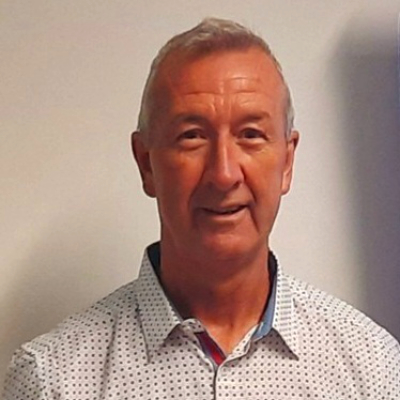
Daithi Ó Murchú
Affiliation: Second You / Drumcondra Educational Centre (Ireland)
Talk: Game-Based learning, Astronomine and 21st Century Teaching and Learning. A Creative, Conscious and Captivating Journey.
Abstract: This presentation explores the intersection of game-based learning, astronomy education, and modern pedagogical approaches in the 21st century classroom. Focusing on the innovative Astronomine project, we will demonstrate how game-based learning can transform abstract astronomical concepts into engaging, interactive experiences for students. We’ll examine how this approach not only enhances subject comprehension but also cultivates creative and critical 21st century skills such as problem-solving, digital literacy, and collaborative learning. The session will showcase practical examples of how educators can integrate these methods into their curriculum, fostering a creative and captivating learning environment that resonates with today’s digitally-native students. Participants will gain insights into the design principles behind effective educational games, strategies for implementation, and methods for assessing learning outcomes in this novel educational paradigm. Join us for an inspiring journey through the cosmos of modern education, where play and learning converge to create transformative educational experiences.
Bio: Daithí has over four decades of distinguished service in the fields of education, sustainable development, and technological innovation, making impactful contributions as a head teacher, university lecturer, author, and entrepreneur. He is behind initiatives such as the Irishtourism Group, BiomeBioYou, SecondYou, and EdTech Ireland. Daithi has extensive experience working with DEIS schools, Irish-medium education, and lecturing at various universities worldwide. Since retiring from teaching in 2014, he has dedicated to global social justice, AI, and sustainability, actively participating in international projects aimed at enhancing education for minority groups. Currently collaborating with organizations across five continents, Daithi co-leads significant EU projects that promote innovative educational practices, digital inclusion, and sustainable economic growth. A passionate advocate for at-risk groups, particularly young girls and women in unstable environments, his work focuses on fostering transformative advancements in education through technology and social equity.
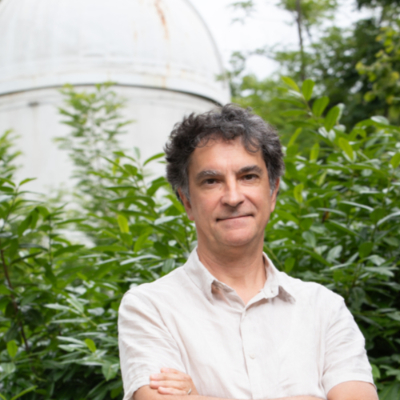
Daniele Gardiol
Affiliation: INAF
Talk: Students as Planetary Defenders: bringing Asteroids and Meteorites into the european classrooms
Abstract: StAnD – StudenTs As plaNetary Defenders is an Erasmus+ KA220 project that will bring the exciting subject of Planetary Defence to schools in Europe.Students will have the opportunity to achieve original discoveries regarding asteroids, meteors and meteorites by conducting real research in the classroom using StAnD’s tailor-made activities. These include meteor camera systems, micrometeorite collection kits, and asteroid search campaigns and follow-up observations. Teachers will receive training by participating in summer schools and enrolling massive open online courses.
Bio: Daniele Gardiol is an astronomer at the Italian National Institute for Astrophysics. After getting his Physics degree, he spent most of his time designing and building astronomical instrumentation. He was a member of the Commissioning Group of the Italian National Telescope Galileo, located in the Canary Islands, and he was responsible for the instrument model of the astrometric ESA mission Gaia. Currently, he is the National Coordinator of PRISMA, the Italian fireball network dedicated to the observation of bright meteors and the recovery of freshly fallen meteorites. So far, PRISMA recovered 2 meteorites, namely Cavezzo in 2020 and Matera in 2023. These two meteorites are part of a group of less than 50 meteorites recovered with such methods worldwide. Gardiol is also heavily involved in outreach and educational activities on the subject of Minor Bodies of the Solar System.
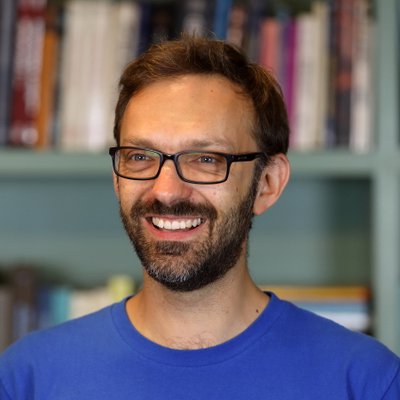
Edward Gomez
Affiliation: Las Cumbres Observatory
Talk: Las Cumbres Observatory: a global network of robotic telescopes for science and education
Abstract: Las Cumbres Observatory (LCO) has created one of the finest examples of a unified network of telescopes, which operate as a single scientific instrument. The telescopes are autonomous and robotic, meaning they are ideal for investigating variable astronomy phenomena which are changing slowly over long time periods, or can be responsive to things happening rapidly – often called time domain astronomy. As well as cutting-edge science, LCO is involved in award winning education with these telescopes, through the Global Sky Partners programme. I will talk about some of the highlights from the science and education projects.
Bio: Dr Edward Gomez is an astrophysicist and award winning educator. As part of his role with Las Cumbres Observatory he finds novel ways to engage the public in science by using astronomy. In particular he is proud of the 2 programmes: Global Sky Partners and Ada’s Adventures in Science. Global Sky Partners provides free education projects using robotic telescopes for predominantly underserved communities around the world. Ada’s Adventures in Science, is a science comic book which inspires and empowers children and young people to believe in their potential to do science, and is available in 18 languages. Edward is the founder of astroEDU, a peer-review platform and repository for open source astronomy education activities. He has young twins and enjoys playing with them, making music and hacking IoT devices in his spare time.
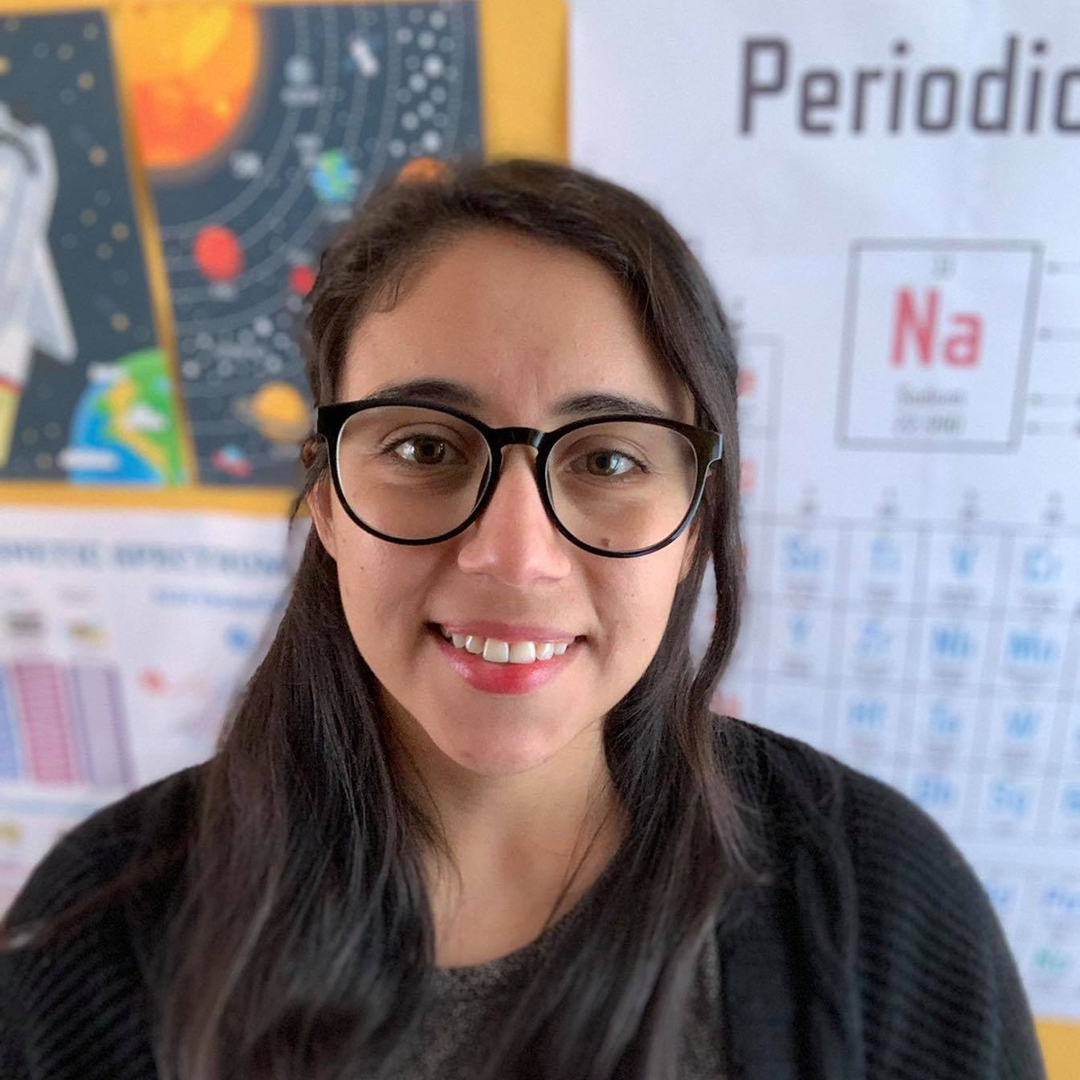
Elizabeth Villanueva
Affiliation: GHOU Chile
Talk: Astronomy Education in Chile: Enhancing Learning Through Extracurricular Programs
Abstract: This presentation explores the teaching of astronomy within the Chilean school curriculum and highlights the progression of learning from basic to advanced concepts. While the curriculum provides a solid foundation, there are limitations in depth and practical application. To address these gaps, extracurricular programs are introduced, offering students hands-on experiences, critical thinking opportunities, and real-world exposure to astronomical phenomena. The presentation will showcase successful examples of these programs and discuss their role in enhancing students’ understanding and enthusiasm for astronomy.
Bio: Elizabeth Villanueva Vásquez is a Physics and Mathematics teacher, holding a master’s degree in Didactics of Experimental Sciences with a specialization in Physics. Since 2010, she has been actively engaged in the Galileo Teachers Training Program initiated by Global Hands-On Universe. Her involvement led her to become an instructor in the program in 2014. She has effectively shared her expertise with more than 100 educators, focusing on the utilization of the SalsaJ program for the analysis of astronomical images.In 2019, she took a significant stride by developing educational content for the instructional kit “An Eclipse in Your Hands” produced in collaboration with Bioquimica.cl and the Pontifical Catholic University of Chile. Presently, she holds the role of coordinator for the online learning community known as Gee-Whiz Astronomy Modeling. This dynamic platform equips secondary school students with the skills and knowledge to engage in astronomical research, working in tandem with educators and advising astronomers. This initiative garners support from GHOU and the remote observatory Las Cumbres, amplifying its reach and impact.
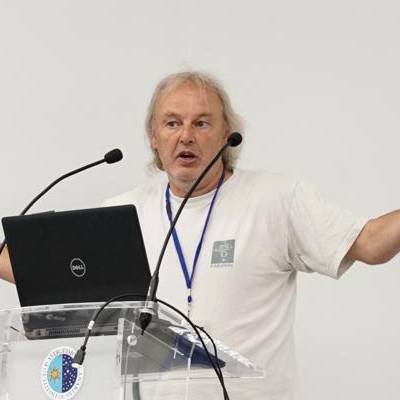
Fraser Lewis
Affiliation: The Schools’ Observatory / Dill Faulkes Educational Trust
Talk: Encouraging Students to Use Robotic Telescopes and Their Archives for Astronomical Projects
Abstract: I’ll look at some of the resources allowing teachers and their students to observe the night sky remotely from wherever they are on the planet. Many people use these opportunities to take images of beautiful objects such as galaxies and planetary nebulae but others are inspired to go further and start to use images as pieces of data. These data can be the basis of colour-magnitude diagrams allowing us to look at stellar evolution and the life cycle of stars, something which thankfully appears in many curricula around the world. Other projects might involve sets of data taken over different timescales to search for variability – a property possessed in almost every astronomical object. Much of my talk will give thanks and credit to those students I’m lucky enough to work with and who, very often, take these aspects of research into directions not foreseen by us educators!
Bio: Fraser is based in Cardiff, Wales and is an educator and researcher with the Faulkes Telescope Project. He creates astronomy resources around robotic telescopes and their archives for teachers and students. He also researches X-Ray Binaries, especially their behaviour at optical wavelengths, and tries to incorporate some of that knowledge into some activities, harnessing students’ innate desire to understand exotic objects such as black holes and neutron stars. He was PI on the recent Erasmus + Project, LaSciL (Large Scientific Infrastructures enriching online and digital Learning) and contributes to the Erasmus + Project, CliC-PoLiT (Climate Action and Light Pollution Threat). CliC-PoLiT examines the effects of climate change and of light pollution. He works with global astronomy education initiatives including Global Hands On Universe (GHOU) and Galileo Teacher Training Program (GTTP).
Loukas Katikas
Affiliation: National and Technical University of Athens
Talk: Fostering teachers’ spatial, digital, and green skills for accelerating Education for Sustainable Development (ESD)
Abstract: His presentation explores the integration of cutting-edge geospatial technologies—such as Geographic Information Systems (GIS), Remote Sensing (RS), and Earth Observation (EO)—into Education for Sustainable Development (ESD) programmes. The focus will be on how these technologies can enhance teachers’ pedagogical, spatial, green, and digital skills. The presentation also highlights strategies for providing teachers with access to new training and teaching resources while helping them acquire key competences to prepare their students for careers in geospatial and environmental fields, and overall, within the STEAM learning path.
Bio: Dr. Loukas Katikas is an environmentalist, and he holds a PhD in Geostatistics from the National Technical University of Athens (NTUA). As a researcher, he has numerous publications in academic journals and conferences and has participated in several EU projects related to Geospatial Sciences, Environmental Protection and Disaster Risk Management, in STEAM Education, and Education for Sustainable Development (ESD). From an educational perspective, he has a strong focus on introducing innovative Earth Sciences topics into the curriculum and implementing training events for educators. Since April 2024, he has been working as a Teaching Laboratory Staff member in the Cartography Laboratory of the NTUA. At the same time, he collaborates as an associate researcher with the Hellenic Centre for Marine Research (HCMR) and he also participates as a member of working groups in the Open Geospatial Consortium (OGC).